The geography of tourism is born from the encounter between the desire to travel and the concrete possibility of arriving. Heritage, landscape, climate, culture and accommodation capacity build the attractiveness of a place, while airports, railways, ports and connections determine how easily that place can enter people’s lives and travel plans.
There is therefore a second geography, less visible than the one drawn on tourist maps. It is made up of routes, frequencies, connections, travel times and small airports. A destination may possess an extraordinary heritage and still remain on the margins of international flows when reaching it requires several stopovers, many additional hours or a sequence of transport connections that is difficult to organise.
The opening of a new route can profoundly change this condition. Understanding to what extent it is the connection that develops the destination, or the growth of the destination that makes the connection possible, however, means observing a relationship in which tourism demand and accessibility evolve together.
Research published in Annals of Tourism Research analysed precisely the causality between direct air services and tourism demand. The authors describe a bidirectional relationship that varies according to the market. Airlines tend to open a route when they identify sufficient demand or credible commercial potential; at the same time, the availability of a direct connection makes the journey easier and increases the number of people willing to consider that destination. Frequency, price, duration and convenience of the connection therefore influence the overall perception of distance.
When the Flight Becomes Part of the Destination
A recent European case makes it possible to observe this mechanism with particular clarity. A study published in 2026 used the interruption of subsidised connections between Asturias and London and Paris as a kind of natural experiment. During the period without direct flights, tourist arrivals from the affected markets fell by an average of 34.3%, with a particularly evident effect on the British market. The authors also estimate, for the interruption of the London-Asturias route, more than one million euros per year in lost regional added value, including direct and indirect effects, compared with an annual subsidy of approximately 600,000 euros.
The value of the Asturian case lies precisely in the possibility of measuring what happens when the connection disappears. Attractiveness, landscape, cultural heritage and accommodation facilities remain in place; what changes is the ease with which the public can reach them.
The air connection thus becomes part of the construction of the tourism experience itself. It reduces perceived distance, facilitates shorter stays, makes possible a departure that would previously have been rejected for reasons of time and enables operators to offer the destination to a wider audience.
For this reason, regional aviation has also become a component of public policy.
In India, the RCS-UDAN programme uses Viability Gap Funding to support connections that, at least in their initial phase, would struggle to achieve economic sustainability independently. The Ministry of Tourism contributes to supporting 53 routes identified with the aim of improving the accessibility of tourism destinations, including lesser-known locations. In March 2026, the government approved a new ten-year phase of the programme, including the development of airports, heliports and new instruments to support connectivity in remote regions.
Australia follows a different but equally significant approach. The Remote Air Services Subsidy Scheme finances scheduled services to up to 276 isolated communities, some consisting of only a few dozen inhabitants and extremely difficult to reach by land during the rainy season. Aircraft carry passengers, medicines, food, mail and essential supplies. Six operators are contracted by the government to serve ten major regions.
In these territories, tourism, essential services and everyday life share the same infrastructure. Visitors use connections that, first and foremost, allow resident communities to maintain economic, healthcare and social relationships with the rest of the country. Tourism accessibility grows within a network designed to make distance habitable.

Every Territory Requires Its Own Aircraft
The transformation of air geography naturally concerns new aircraft capable of covering greater distances with lower fuel consumption, but it becomes even more interesting as the scale decreases.
The Airbus A220-100, for example, can typically carry 100-120 passengers and reach 3,600 nautical miles. Airbus describes it as a route opener: an aircraft sized for relatively thin routes, where capacity, range and efficiency can make it possible to open routes that would be difficult to sustain with larger aircraft.
Moving further down in scale, the nature of the network itself changes.
In Brazil, Azul Conecta, a subsidiary of Azul, uses Cessna Grand Caravans for sub-regional transport. According to Azul, in 2025 the airline operated 27 Caravans, aircraft with a maximum of nine seats used particularly for remote destinations or locations with limited airport infrastructure.
It is a model of sub-regional aviation particularly well suited to territories with the characteristics of the Amazon, where vast distances, rivers, forests and population distribution require networks structured across several levels. A long-haul international flight can feed a national hub; from there, a regional flight brings the passenger closer to the destination and a small aircraft completes the final segment.
The journey becomes a chain of connections, in which even a nine-seat aircraft can play a role in the construction of an international itinerary.
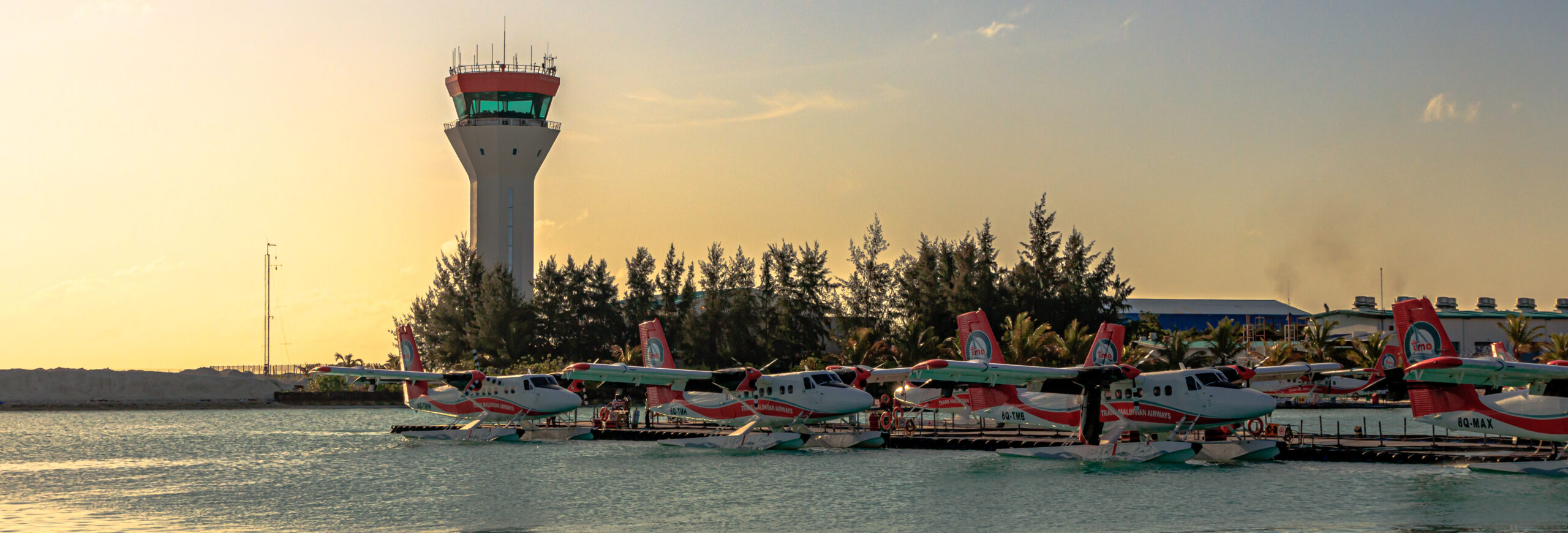
Canada offers another interpretation of the same principle. The De Havilland Canada Twin Otter Series 400 combines an airframe designed for demanding operations with contemporary Honeywell Apex avionics and a cabin capable of carrying up to 19 passengers. It can be equipped with wheels or amphibious floats, moving from a conventional runway to a water landing.
Along the coast of British Columbia, an inlet, harbour or coastal community can therefore be incorporated into a transport network without requiring the construction of a traditional airport. Harbour Air has developed a scheduled seaplane network around precisely this possibility.
Aeronautical technology is therefore changing the very concept of infrastructure. In some places, a long runway is required; elsewhere, a few hundred metres are sufficient. In other cases, the available surface is water.

Being Reachable Also Means Being Bookable
For the travel trade, however, there is another frontier of accessibility, apparently less fascinating than a seaplane landing in front of a remote village, but decisive in transforming that connection into a tourism product.
The physical possibility of arriving must be accompanied by the commercial possibility of booking.
A small operator may sell its seats through its website, by telephone or through a local ticket office and still be difficult to integrate into an itinerary created by a European tour operator or travel agency through Amadeus, Sabre or Travelport.
When the regional segment remains outside the main distribution systems, the journey becomes fragmented. The agent has to make separate bookings; the passenger may find themselves with separate tickets; baggage procedures and connection management become more complex. A destination that is reachable on paper can therefore remain commercially peripheral.
Alaska illustrates this reality well. Bering Air connects numerous small settlements in western Alaska from Nome, Kotzebue and Unalakleet, some with populations of only a few hundred inhabitants. The carrier allows online booking and maintains a structure strongly rooted in the territory for reservations and assistance. The State of Alaska classifies many of these operators as a specific category of rural carriers, adopting dedicated procedures within its own travel system.
Cape Air represents a different form of integration. Although it uses small aircraft, the airline has interline agreements with several major carriers and its segments can be included in broader itineraries. When necessary, flights can be ticketed through Hahn Air in the main GDSs, including Amadeus, Sabre and Travelport.
For those building the journey, the difference is profound. The small regional flight becomes part of the same commercial architecture as the international long-haul sector.
In Canada, Pacific Coastal Airlines makes its flights available to agents through Sabre and Travelport and, for agents outside Canada and the United States, uses Hahn Air as a ticketing solution.
Harbour Air, with its seaplanes along the coast of British Columbia, is also now displayed in GDSs through Hahn Air’s X1 platform.
New Zealand adds another particularly significant case. Air Chathams was created to guarantee connections between the remote Chatham Islands and the mainland. In July 2026, it strengthened its distribution through Hahn Air, making flights sellable under the 3C code in Amadeus and using the HR-169 infrastructure for ticketing in the main GDS environments.
For a remote destination, therefore, physical infrastructure and digital infrastructure are beginning to carry comparable weight. The runway allows the aircraft to arrive; distribution allows the journey to exist within the tourism supply chain.
Aircraft and Railways, Two Complementary Geographies
The same relationship between infrastructure and destination can be found in rail transport. High-speed rail, international services and night trains can transform previously peripheral cities into destinations suitable for short stays, weekends or multi-city itineraries.
Railways express their full strength along land corridors capable of concentrating large flows. Aviation, on the other hand, assumes a decisive role when oceans, forests, deserts, mountains, islands or immense distances separate communities and markets.
In many territories, the future geography of travel will emerge precisely from their integration: large airports connected to high-speed rail networks, regional aircraft feeding hubs and small carriers completing the final segments towards coastal communities, islands or remote regions.
The destination thus becomes a node within a much larger network.

The Promise of Future Routes
The next transformation may begin precisely with regional distances.
Heart Aerospace is developing the ES-30, a 30-seat aircraft designed for approximately 200 kilometres of fully electric range and up to approximately 800 kilometres in hybrid configuration. The manufacturer indicates 2031 as its target for certification. In August 2026, the X1 demonstrator completed its first electric flight, lasting 27 minutes: an experimental step that makes the prospect of a new generation of regional aviation more concrete.
If these technologies succeed in reducing operating costs and emissions on short routes, they could further increase the number of economically sustainable regional markets. Some distances that today require subsidies, conventional aircraft or occasional connections could find new operating models.
Alongside technology, however, there remains a second promise, one that is much older: diplomacy.
The international sky continues to be shaped through agreements between States. ICAO’s 2025 ICAN event produced at least 440 new or updated bilateral and multilateral agreements. Through these negotiations, market access, capacity, operating rights and the conditions enabling airlines to establish new connections are defined.
A WTO study conducted across 184 countries also estimated that, for pairs of countries already directly connected, higher levels of liberalisation in air service agreements are associated with significantly greater traffic volumes. In the model used by the study, moving from 25% to 75% on the liberalisation index is associated with approximately 30% higher traffic.
This relationship between aviation and diplomacy carries with it a particularly significant history.
In December 1944, while the Second World War was still under way, representatives of 54 States gathered in Chicago to imagine the rules of future civil aviation. Europe was still engulfed by war, the conflict in the Pacific would continue for several more months and millions of people were living through one of the greatest tragedies in contemporary history.

The Chicago Convention was already looking beyond the war.
In its preamble, the signatory States declared that the future development of international civil aviation could contribute to creating and preserving friendship and understanding among the nations and peoples of the world.
The idea that flight could become an instrument of international relations was formulated while those same skies were still being crossed by military aircraft.
Perhaps this is the deepest dimension of the geography of flight.
A new route connects airports, but it also connects people who live in distant places, creates employment opportunities, brings visitors to peripheral territories, enables cultural exchange and opens markets that previously communicated only with difficulty.
Technology, public policy, commercial distribution and diplomacy ultimately converge on the same line drawn between two points on the map.
The ES-30 and other hybrid projects promise to make that line more efficient. Small regional aircraft already make it possible to extend it towards forests, islands, coastlines and remote communities. GDSs and interline agreements allow the travel trade to transform it into a journey that can be purchased. Diplomatic agreements ultimately determine whether that line can cross a border.
Eighty years after Chicago, that vision retains a remarkable relevance.
Every new route can become a small infrastructure of connection: bringing territories closer together, circulating knowledge, generating income through travel and offering people a different way to meet.
The geography of the future could also be built in this way: with more lines connecting and fewer borders separating.
Main Sources
ICAO, Connectivity; Air Transport for All / ICAN 2025; World Air Services Agreements.
WTO, Piermartini R., Rousová L., Liberalization of Air Transport Services and Passenger Traffic.
Australian Government, Remote Air Services Subsidy Scheme.
Pacific Coastal Airlines, Cape Air, Hahn Air, Air Chathams and Harbour Air — official documentation on GDS distribution and interline agreements.
Airbus, De Havilland Canada, Heart Aerospace — technical documentation for the aircraft mentioned.
By Daniele Di Stefano