The Japan we know even before leaving is made up of extraordinarily powerful images: Tokyo illuminated at night, Kyoto and its temples, Osaka, Mount Fuji, cherry blossoms, and shinkansen trains crossing the country like a promise of precision. It is such a powerful imaginary that it almost becomes a mental geography.
Then there is another Japan, less immediate, which does not replace those images but completes them. It is the Japan of castle towns, northern coastlines, walking pilgrimages, trains that become part of the journey, small ports, stations among the mountains, onsen and a samurai culture that survives in the structure of cities and homes.
Tohoku and Shikoku belong to this second geography. Both allow the journey through Japan to extend in depth, rather than simply in distance.
Japan, after all, is a country that reveals itself in layers. Some are immediately visible, while others emerge only when one slows down. It is a subtle stratification, almost like that of the steel of a katana, where successive folds build strength, elasticity and form. Modernity, ritual, landscape, feudal memory, technology, craftsmanship and literature do not belong to separate eras: they coexist in the same place, often only a few metres apart.
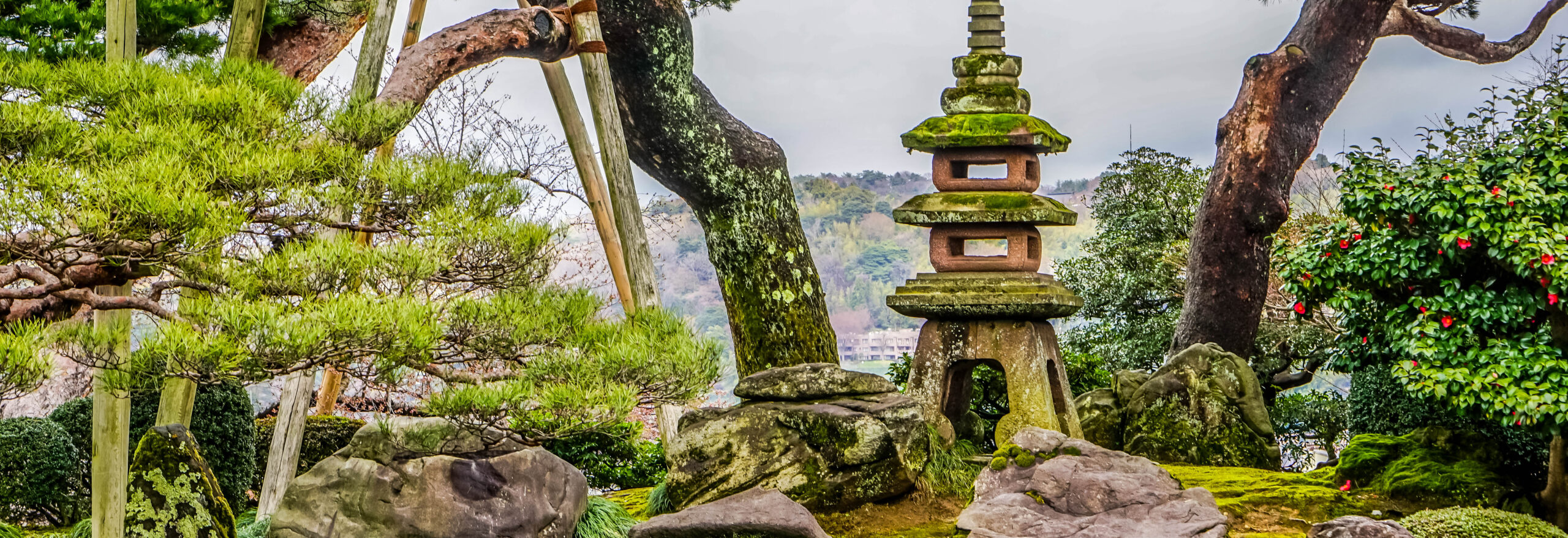
Distance Changes When You Board a Japanese Train
To understand Tohoku, perhaps one should begin at Tokyo Station.
The train arrives, lines form on the platform and, within a few minutes, the metropolis begins to disappear. The speed of the shinkansen is extremely high, but inside it is perceived in an almost paradoxical way: movement is continuous, while the environment remains silent, orderly and regular.
The seat holds the body lightly, the noise is low and constant, and the landscape flows beyond the window without jolts. Speed is not perceived as acceleration: it is understood through the rapidity with which the images change.
Tokyo dissolves into suburbs, then fields, waterways, villages, slopes and mountain profiles. In winter, the dominant colour gradually becomes white. In spring, green seems to occupy every available space. Physical distance is reduced without turning into haste.
This is one of the most distinctive aspects of Japanese rail travel. In just a few hours, one can cross a considerable part of Honshu while continuing to observe the territory: plains, rice fields, mountains, small towns, rivers and snow.
The Tohoku Shinkansen runs towards Sendai, Morioka, Hachinohe and Shin-Aomori; branches and other lines lead to Yamagata, Akita and Kakunodate. Yamagata can be reached from Tokyo in around two and a half hours on the Yamagata Shinkansen; Kakunodate in around three hours on the Akita Shinkansen.
Rail travel therefore changes what we might call mental distance. A city that appears remote ceases to feel so when the journey to reach it becomes simple, readable and comfortable.
JR East has also transformed this experience into a tourism product through its Joyful Trains. The Tohoku Emotion, for example, travels along the coast between Hachinohe and Kuji as a restaurant on rails: an open kitchen, regional ingredients and interiors incorporating materials and craft traditions from Fukushima, Aomori, Iwate and Miyagi. The train thus becomes a form of interpretation of the territory.
One does not simply travel through Tohoku. One begins to read it through the window.
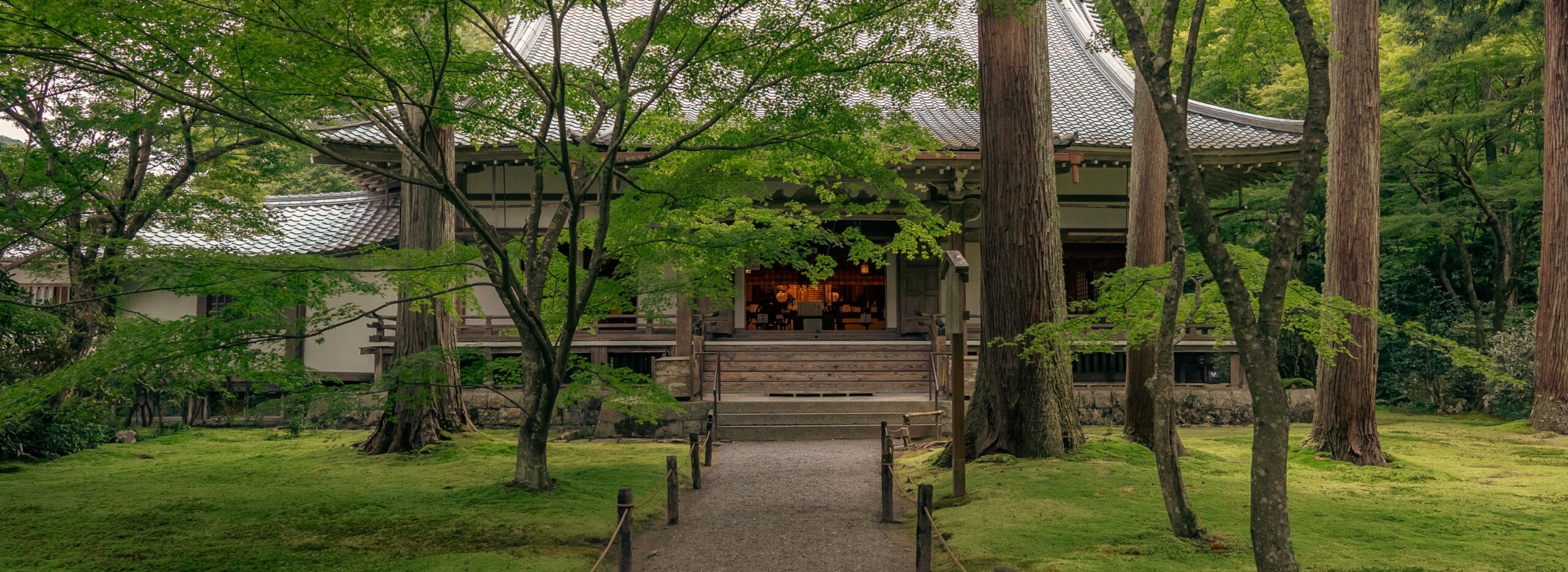
The Japan of the Samurai Is Still a Real Geography
Among the surprises of Tohoku is the fact that some images generically associated with feudal Japan acquire a precise location here.
Kakunodate, in Akita Prefecture, preserves a district of samurai residences dating back to the structure of the castle town founded in the seventeenth century. Some homes are still private residences, while others can be visited. The wide streets, dark fences and historic buildings restore the domestic dimension of the samurai world, very different from the monumentality of a castle.
Here, history has an almost tactile consistency. Blackened wood, controlled but never rigid gardens, gravel beneath one’s steps, sliding doors, everyday objects. The figure of the samurai gradually loses its cinematic patina and regains human proportions: someone who lived in a house, walked those streets and belonged to a precise social system.
Further south, Aizu-Wakamatsu preserves another memory. It was one of the last strongholds of the Tokugawa world during the Boshin War of 1868–1869. Tsuruga Castle, the samurai residences and the story of the young Byakkotai warriors make the city one of the places where the transition from feudal Japan to the Meiji era can be read directly in the landscape. JNTO explicitly proposes itineraries dedicated to the “samurai spirit” of Aizu.
Samurai culture therefore does not become a piece of scenery added to the journey. It is inscribed in the organisation of cities, in buildings and in the battles that shaped their history.
Shiroishi, in Miyagi Prefecture, also preserves its connection with the Katakura clan and offers experiences related to warriors’ armour, while regional itineraries link Aizu, Yonezawa, Shiroishi and Sendai through the military history of Tohoku.
It is a Japan that many travellers have probably already imagined through films, novels and images, without knowing exactly where to find it.
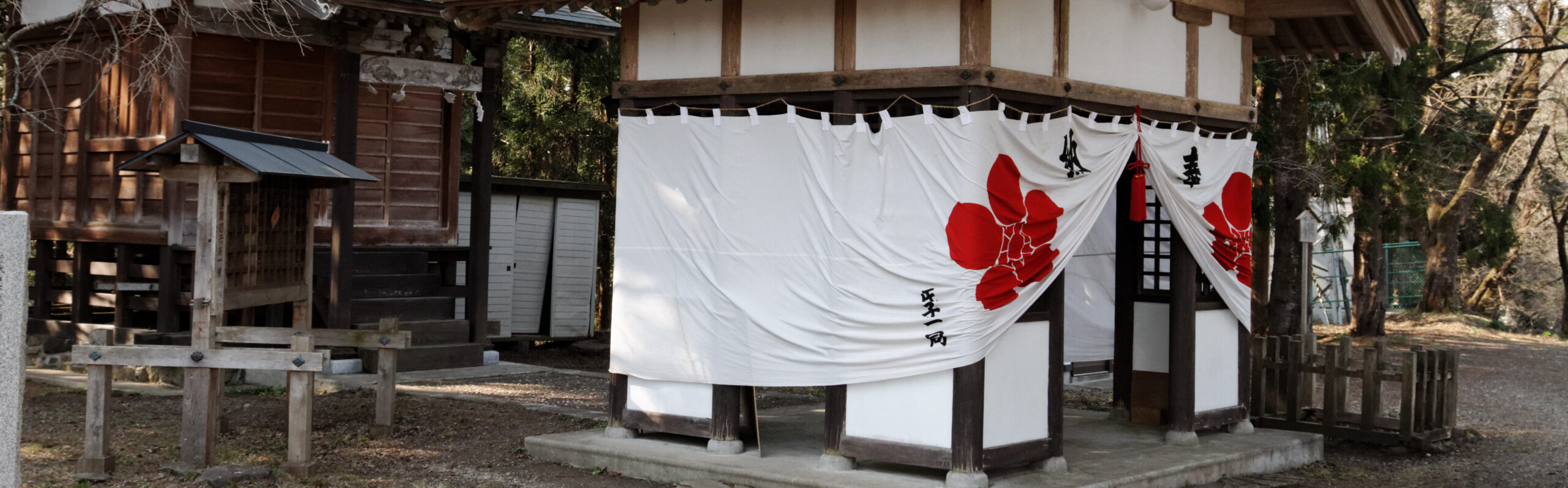
Yamagata: When Cinema Gives the Landscape a Face
Cinema can help us recognise it.
Departures by Yōjirō Takita, winner of the Academy Award for Best Foreign Language Film in 2009, was filmed largely in the Shonai region, in Yamagata Prefecture. The cities of Sakata and Tsuruoka, Mount Chokai and other landscapes of the region become much more than a backdrop in the film. They accompany the protagonist’s return towards a slower, more ritualised life, deeply connected to the territory.
JNTO has transformed the film locations into a true geography of travel, identifying Sakata, Tsuruoka and Mount Chokai among the places recognisable from the story.
Yamagata thus reveals how dramatically the Japanese landscape can change far from urban imagery.
Towards the Sea of Japan appear port cities such as Sakata and Tsuruoka; inland, Yamadera rises along the mountain, while Zao alternates onsen with winter landscapes marked by its famous snow monsters. Ginzan Onsen, meanwhile, preserves an architectural fabric reminiscent of early twentieth-century Japan.
At Ginzan, especially in winter, the landscape seems to contract around the sound of water. The wooden façades of the inns emerge from the snow, steam rises from the channels and baths, and the cold air makes the sensation of warmth even more intense.
Entering an onsen means experiencing an almost immediate form of contrast: first the cold on the skin, then the growing warmth of the water, finally that moment when the body seems to lose its weight. The landscape remains before the eyes while temperature alters the perception of time. It is a physical experience, but also a cultural one: silence, ritual, respect for shared space.
Here, the journey acquires a different density. Cinema, ritual, nature and everyday life begin to overlap.
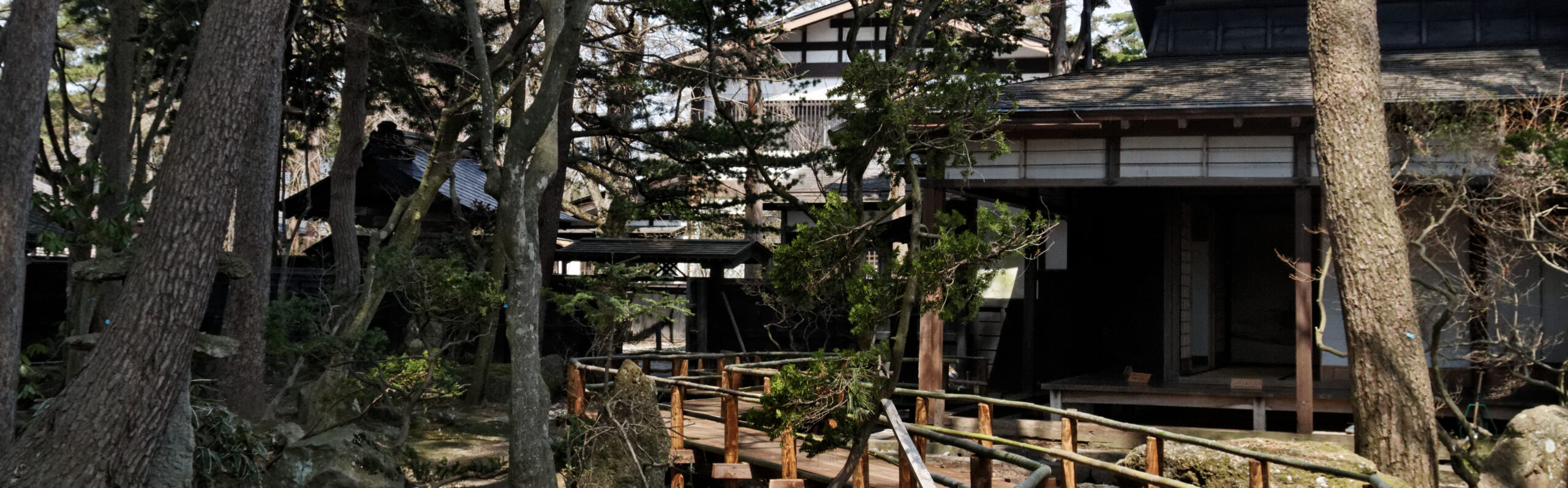
Shikoku: The Journey Becomes a Path Again
If Tohoku opens along major railway axes, Shikoku demands a different rhythm.
The smallest of Japan’s four main islands lies between the Seto Inland Sea and the Pacific and preserves a tourism structure made up of castle towns, islands, mountains, rivers and routes.
One of its fundamental experiences has existed for centuries: the 88-temple pilgrimage, linked to the figure of Kūkai, Kobo Daishi.
The route crosses all four prefectures of Shikoku and transforms the journey into physical and spiritual progression. The pilgrim, the henro, proceeds through cities and countryside following a religious geography that today can also be interpreted through walking tourism, slow travel and personal exploration. JNTO presents the pilgrimage as one of the defining elements of the entire island.
Here, the road produces a different perception of space. The rhythm of footsteps, the rustle of clothing, the intermittent sound of temple bells and the continuous passage between villages, forests and contemporary roads create a form of travel that never completely separates present from past.
The experience feels profoundly contemporary precisely because it was born long before contemporary tourism: the time required to cross a territory regains value.
Matsuyama: Literature, Castle and Thermal Water
In Matsuyama, in Ehime Prefecture, literary Japan enters directly into the city.
Natsume Sōseki lived here and transformed that experience into the novel Botchan. The connection became so close that a replica steam locomotive travelling through the city bears the protagonist’s name. Matsuyama is also associated with the haiku tradition through Masaoka Shiki.
Here, literature seems to possess a material quality of its own. Old photographs, façades, the rhythm of the city and the carriages of the Botchan Ressha evoke something of the texture of the pages of a book read many times: slightly rough paper, worn margins, words that continue to live because they have found a real place to which they belong.
Above the city stands Matsuyama Castle, one of the few Japanese castles to preserve original structures. Nearby lies Dōgo Onsen, considered one of the oldest hot-spring establishments in the country.
Entering Dōgo means moving from the outside into half-light, from the noise of the street into more enclosed corridors. Wood, humidity and heat immediately alter the atmosphere. When the body enters the water, the city seems to recede for a few minutes. What remains above all is the sensation of warmth slowly rising and steam softening the outlines.
There is also a cinematic connection here that should be treated with caution. JNTO reports that Dōgo Onsen Honkan is cited among the possible sources of inspiration for the bathhouse in Hayao Miyazaki’s Spirited Away. It is an evocative relationship rather than a direct connection officially certified by Studio Ghibli, but simply observing the wooden structures, corridors and atmosphere of the complex is enough to understand why the association became so popular.
In Matsuyama, samurai culture, literature and thermal culture ultimately come together in the same itinerary.
Kochi: Another History of the Warriors
Continuing south, Kochi offers another face of Shikoku.
The castle still dominates the city and preserves original architectural elements from the seventeenth and eighteenth centuries. It was the political centre and residence of the feudal lord, and today makes it possible to understand the relationship between power, city and territory during the era of the domains.
Climbing towards the castle, the urban landscape changes slowly. Walls, stone, wood and openings over the city tell the story of an architecture built as much to observe as to be observed. The relationship with the territory is immediate: the castle is history, but also a viewpoint.
Kochi Prefecture is also linked to Sakamoto Ryōma, a samurai and reformer involved in the political processes that led to the end of the Tokugawa shogunate. It is another way of reading samurai history: through men who helped to overcome the very system from which they came.
Around it, however, the landscape changes again: the Pacific, the Shimanto River, the coasts of Muroto and the rural areas gradually shift the journey from history towards the environment.
Here Japan seems to widen. The Pacific wind, the humidity of the rivers and the deep green of the mountains make the distance from the great cities almost physical.
Setouchi: Contemporary Japan Among the Islands
Shikoku also contains one of the most interesting cultural transformations in contemporary Japan.
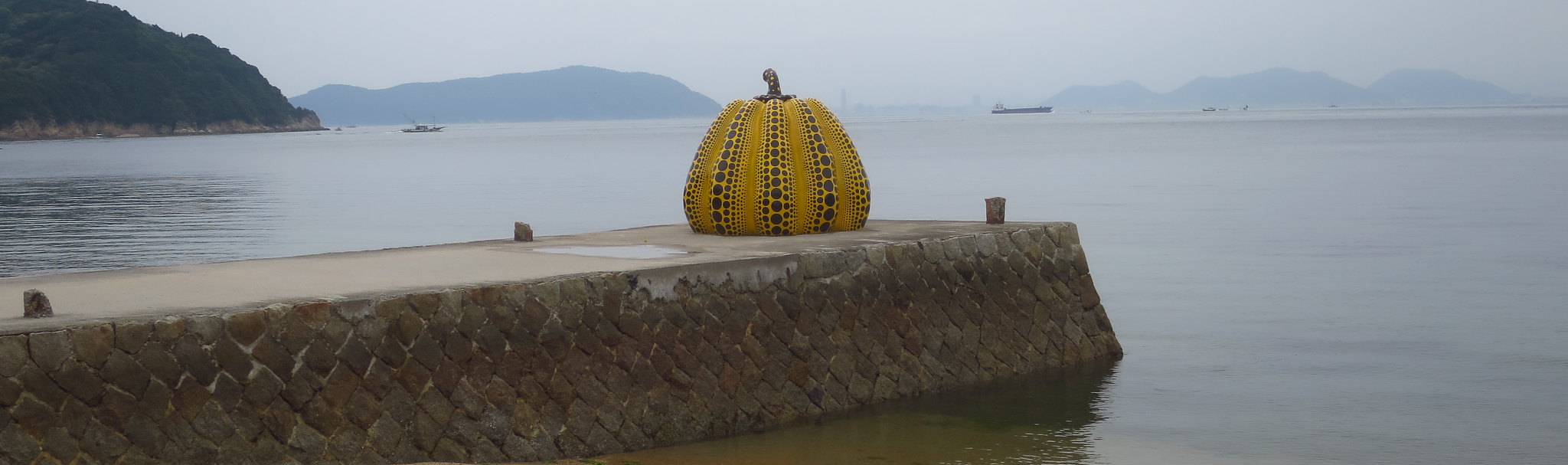
Between Takamatsu and the islands of the Seto Inland Sea, places such as Naoshima, Teshima and Inujima have created a new geography through art, architecture and landscape.
Here, museums designed by Tadao Ando, installations and cultural projects engage with island communities and territories that for a long time remained outside the main tourism routes.
The Setouchi Triennale has helped give this constellation of islands an international profile. The result is significant because it shows how a region can enter the global imagination through a completely new narrative: not an ancient monument, but the relationship between contemporary culture and territory.
The light of the Inland Sea contributes to the experience as much as the artworks themselves. It changes across concrete surfaces, enters museums, reflects on the water and continuously alters the colour of the islands. Art is perceived together with the wind, the sound of ferries, the salt in the air and the silence separating one work from another.
Shimanami Kaido: Crossing the Landscape
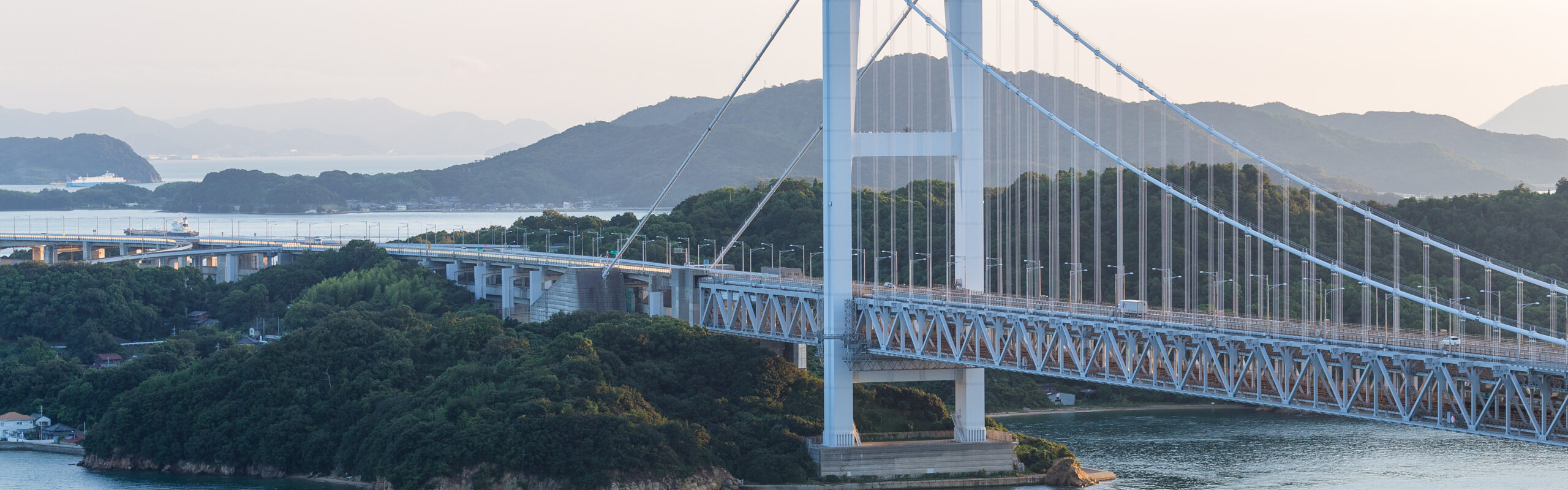
The same happens along the Shimanami Kaido, the system of bridges and islands linking Honshu and Shikoku across the Inland Sea.
The bicycle transforms a major infrastructure into a tourism experience. Travellers move slowly from one island to the next, encounter small ports, citrus groves, temples and villages, and continuously see the relationship between land and sea change.
The wind shifts on the bridges, the scent of citrus rises from the roadside, and the sea appears and disappears around the bends. From the height of the spans, the Seto Inland Sea seems almost motionless, scattered with islands; a few minutes later one is back at water level, beside a harbour or a small café.
Distance regains a meaning almost opposite to that of the shinkansen. In Tohoku, the train compresses hundreds of kilometres into a few hours without making speed perceptible. On the Shimanami Kaido, the bicycle restores value to every kilometre.
They are two different ways of making a territory accessible.
The Layered Japan
Tohoku and Shikoku share above all this: they add depth to what we thought we already knew about the country.
The Japan that emerges from these territories is multifaceted, but rarely contradictory. Each era seems to rest upon the previous one without completely erasing it.
Like the extremely thin layers of steel in a katana, strength is created through superimposition.
The samurai memory of Kakunodate and Aizu coexists with the precision of the shinkansen. The spirituality of the Shikoku Henro crosses contemporary roads. Sōseki’s novel continues to live in the trams of Matsuyama. The steam of Dōgo Onsen meets a contemporary cinematic imagination. The islands of Setouchi preserve ancient communities while hosting some of the country’s most radically modern artistic experiences.
Each layer modifies the previous one without making it invisible.
One of the deepest experiences of travelling in Japan is realising that the present never arrives entirely on its own.
The Japan That Appears After the First Japan
Tohoku and Shikoku do not ask travellers to abandon the great icons.
They complete them.
The samurai ceases to be an abstract figure and acquires a house in Kakunodate, a castle in Aizu, a city in Kochi. The onsen becomes a lived ritual at Dōgo or among the mountains of Yamagata. Cinema finds a real landscape in Shonai. Literature crosses the streets of Matsuyama. The 88-temple pilgrimage restores the dimension of time to travel. Contemporary art transforms the islands of Setouchi into a new cultural archipelago.
Station after station, the metropolis gives way to mountains, rice fields, rooftops, snow and sea. Sounds, light, temperature and the rhythm of the journey change.
This is the most interesting meaning of a more lateral Japan: discovering that the country we had imagined was only the first layer.
Sources
Japan National Tourism Organization (JNTO), Tohoku, Yamagata, Akita/Kakunodate, Aizu-Wakamatsu, Shikoku, Ehime/Matsuyama and Kochi.
JR East, official documentation on Joyful Trains and the Tohoku Emotion.
Tohoku Tourism Promotion Organization, historical and samurai itineraries between Aizu, Yonezawa, Shiroishi and Sendai.
JNTO, feature on the locations of Departures in the Shonai region, Yamagata.
JNTO, official materials on the 88-temple pilgrimage of Shikoku.
Tourism Shikoku / Setouchi Triennale, materials on Naoshima, Teshima, Setouchi Art Islands and Shimanami Kaido.
Japan Tourism Agency, documentation on the development and dispersion of regional tourism in Japan.
Filmography
Departures / Okuribito — Yōjirō Takita, 2008.
Spirited Away / La città incantata — Hayao Miyazaki, 2001.
Botchan — various adaptations of the novel by Natsume Sōseki.
The Twilight Samurai — Yōji Yamada, 2002.
The Hidden Blade — Yōji Yamada, 2004.
By Daniele Di Stefano