When the Guided Tour Gives Way to Conversation
Off-season travel can create more time for conversations with year-round residents, revealing how destinations function beyond their busiest tourism periods.
Living cultural heritage survives through the people who practise and transmit the skills, rituals and knowledge that shape a destination’s objects, landscapes and everyday life.
Outside the conventional tourism periods, the way a destination can be discovered also changes. At least in part, that programmed succession of visits, attractions, reservations and schedules that tends to organize travel during peak periods falls away. More space remains between one place and another, between one person and another, and above all more time remains.
Time to stop in front of a landscape without a line of visitors pushing toward the next point, to enter a café without worrying about the next reservation, to remain a few minutes longer in front of a painting or observe how a city continues to function when its everyday life returns to the foreground.
Voice maps often emerge in these interstices. They do not necessarily take the form of an interview or an organized meeting with a guide. They may begin while someone pulls a boat ashore, with a question asked at a pub counter, with the owner of a restaurant who has time to stop beside the table. They may arise on a bus, in a market, outside a station or along a trail.
Out of season, the quality of attention changes. The pressure that during the busiest periods turns many encounters into functional interactions may decrease: ordering, paying, asking for directions, reaching an attraction. When the pace slows, some of these interactions become conversations.
And it is through those conversations that the territory acquires a voice.

A Tide Told by Those Who Know It
A coastline observed on a map is a line. Along many Atlantic coasts, that line changes several times throughout the day following the rhythm of the tides.
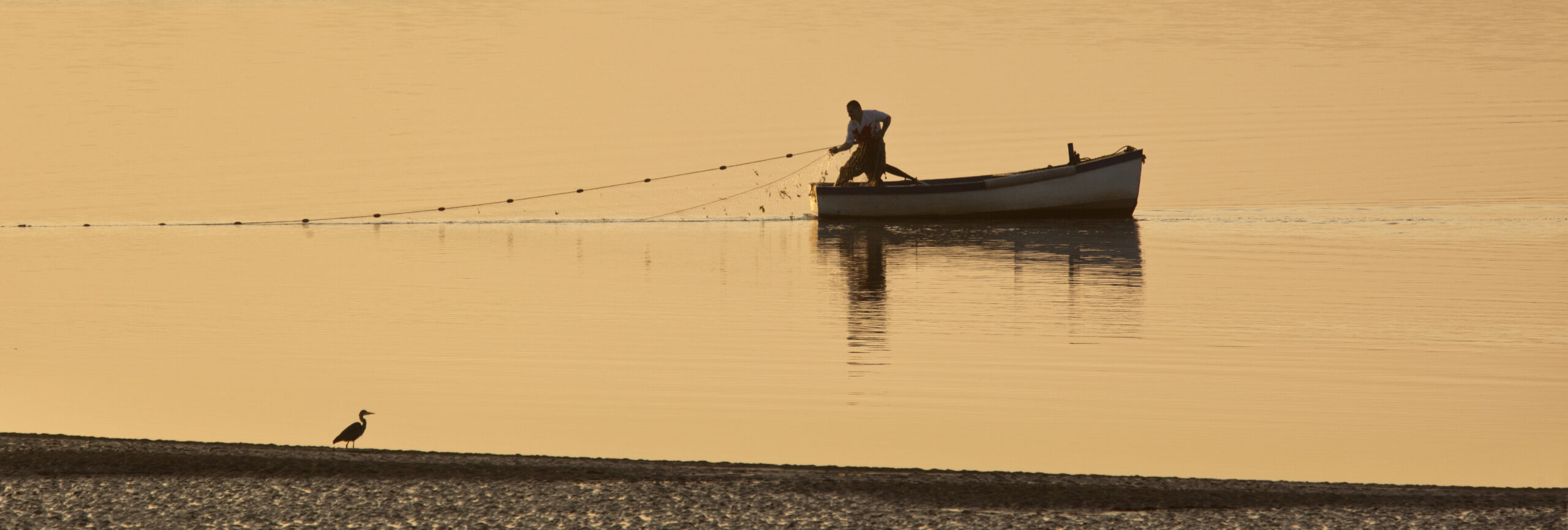
Out of season, you may happen to meet a fisherman while he is arranging his nets or dragging a small boat across the wet sand. A question about the tide can open up a story: how quickly the water will return to cover the bay, which channels will fill first, how the wind will change the current or why some apparently calm days require caution.
Meanwhile, the landscape changes. The water has withdrawn, leaving an expanse of shiny, almost metallic sand. The boats rest tilted on the seabed. Iodine, seaweed, wet wood and brackish mud mingle in the air. Birds occupy for a few hours a space that will soon be submerged again.
Then the tide begins to rise again, first through thin veins of water entering the channels, then increasingly quickly. What only a short while earlier seemed to be land becomes sea again.
The explanation heard on the shore remains linked to the image. The voice, the wind, the cold on your hands and the movement of the water become a single memory.
This is the nature of voice maps: geography is explained while it is being crossed.

Oregon, When Autumn Changes the Rhythm of the Landscape
Autumn in Oregon offers another form of travel outside the periods conventionally associated with summer. Visitor flows change, weather conditions change and, above all, the texture of the landscape changes.
The light lowers. The days become wetter, especially in western Oregon, while the green of the conifers mixes with the yellows, oranges and reds of deciduous trees. Underfoot, wet leaves become soft and the smell of earth, bark and moss rises from the ground after the rain.
Along the roads of the Columbia River Gorge, mist can hide the mountains and then suddenly open up. Water runs down the rocks, waterfalls gain strength and raindrops on the windshield distort the landscape.
The journey unfolds differently. You stop more often, entering a bakery, a diner, a brewery or a café in a small town that at another time of year would have been only a stop along the way. A conversation about the weather can become the story of a difficult winter road, a fire season or a small town that has changed over the years.
A gray day, the sound of rain on a wooden roof and a conversation that begins while waiting for a downpour to ease can leave a more precise memory than a succession of viewpoints crossed during a perfectly planned day.
The Mountains When the Holidaymakers Have Left
The mountains undergo a similar transformation between the end of summer and the arrival of the ski season. Parking areas empty, lifts may be stopped, some hotels close for a few weeks. The landscape, however, takes on other textures.
Dry leaves make a faint sound under hiking boots, almost like crumpled paper. In the woods the air smells of wet earth, bark and moss. In the evening, the smell of burning wood drifts from chimneys as shadows descend along the slopes.
In a quiet mountain hut or in the village bar, it becomes easier to listen to those who live in those mountains all year round. A road crossed in summer to reach a viewpoint may, for those who live there, be the connection to the nearest hospital. A scenic pass can become, with the first snowfall, a frontier that changes travel times and distances.
Knowledge of how that territory is inhabited is thus superimposed on the beauty of the autumn colors. This too is part of the voice map.

Valparaíso, When the Pacific Enters the City
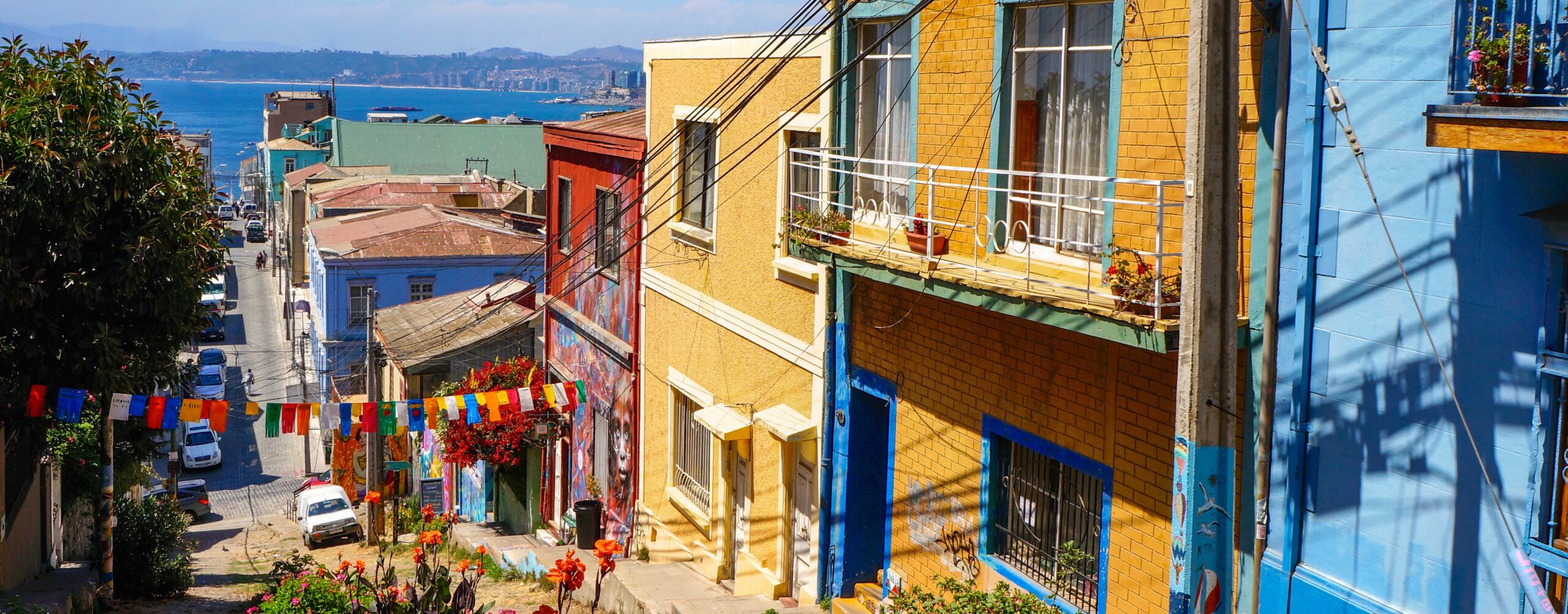
In Valparaíso, on the Chilean coast, less crowded periods alter the relationship with a city deeply connected to its port and to the geography of its cerros. Houses continue to climb the hills, some of the historic funiculars connect different levels and buses travel along steep streets between painted walls and façades worn by salt air.
When visitor pressure decreases, the everyday and port character of the place emerges more clearly. The Pacific wind enters the streets carrying the smell of salt, fuel, fish and metal. Mist can erase the horizon and then open up, leaving a cold light over the colorful houses.
In a small restaurant or in a bar away from the most traveled routes, a conversation can begin with the weather and quickly reach the city itself. Someone tells how a neighborhood has changed, someone else talks about the port, the workers, the ships and the periods when the rhythms of residents prevail.
The traveler who arrives expecting murals and panoramas finds a more complex city. The port appears for what it represents in the history and urban structure of Valparaíso: an infrastructure that has helped determine its rhythms, occupations and identity.
The voice map takes shape through the stories heard and the explanations of those who consider those climbs, those winds and that port part of their everyday life.

Indonesia, When the Rain Changes the Journey
In Indonesia, the concept of the off-season requires abandoning the European calendar. Across much of the country, the tropical climate alternates between drier and wetter periods, with considerable variations between islands and regions.
In Java and Bali, the generally wetter months can offer a different way of moving through the territory, knowing that rain can alter plans, travel times and outdoor activities.
Sometimes it arrives with a sudden change in light. Clouds gather, the air becomes heavy and within minutes water beats down on corrugated roofs, broad leaves and hot asphalt. Then everything smells different.
Wet earth, cooking smoke, spices, vegetation and humidity enter the air together. In the fields, the green of the rice paddies seems more saturated. Roads slow down and scooter riders seek shelter.
It is during those pauses that a voice map can emerge. In a warung, in front of a hot drink or a dish prepared while the rain continues outside, a question about the downpour can lead to conversations about harvests, seasons, the village, ceremonies or how much a particular area has changed with the arrival of visitors.
The tourist imagination of Bali and other Indonesian destinations often favors clear skies and rice fields lit by the sun. A day during the wetter months has a different density. In the markets, the floor remains wet, umbrellas brush against each other between the stalls, steam rises from pots and everyday life continues by adapting to the climate.
A connection may take longer, an excursion may be postponed, a road slowed by water. The climate temporarily redraws the map of the journey.
The unexpected does not guarantee a better experience, but it can make it deeply personal.

Cities in Their Secret Beauty
In cities, the change may be less obvious, but equally significant. A square crossed during peak periods by thousands of people can appear almost vast on a quieter morning. The façades and stones are the same, but the distance between passersby restores proportions that the crowd had erased.
The sound of footsteps becomes audible again. Fragments of music, dishes, a television playing drift from the windows. Cities regain their domestic dimension.
In the half-empty restaurant, the waiter may have time to recommend a dish. In the pub there are people meeting after work. At the market, conversations return to those between traders and regular customers.
A traveler can discover a city through the way the bartender greets people by name when they enter, a discussion about the local league or the story of a neighborhood that has changed over time. The guided tour gives way to a more open form of knowledge.
Traveling by Accepting the Unexpected
The off-season should not be idealized. The price of silence may be rain. A restaurant may be closed for holidays, the ferry may have fewer departures, a trail may be impassable, a property may reopen only with the following season.
These conditions require greater flexibility. If it rains, the covered market can take the place of the excursion. If a connection is canceled, you stay longer in the place where you are. If a restaurant is closed, you enter the one where local residents are having dinner.
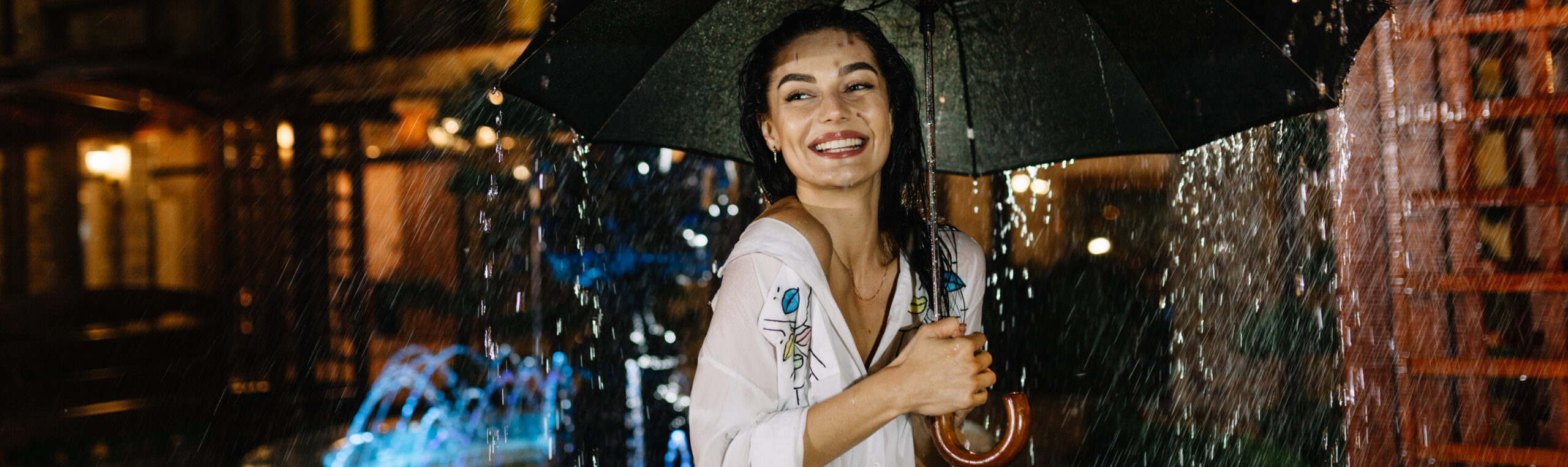
Often, the memory forms around the detour. A sudden rainstorm transforms the city: the asphalt becomes glossy, signs reflect on the sidewalks, steam fogs the windows of cafés. A gray day can make the colors and smells of a forest more intense.
Voice maps also contain this information: they tell how a place lives when conditions change and how the journey can adapt.

Telling the Off-Season Story Is an Opportunity for the Trade
For the trade, this dimension opens up an interesting commercial space, but it requires a narrative different from that of conventional holidays. Proposing a destination out of season means constructing from the outset the imagined experience the customer will encounter.
Someone choosing Oregon in autumn must be able to imagine forests, waterfalls and colors together with the increasing likelihood of rain in western Oregon, mist and shorter days. Someone traveling to Java or Bali during the wetter months must be aware of the possibility of heavy showers and changes to plans. Someone leaving for Chile during a less crowded period must know that wind, mist or rain can change the perception of the coast and the city.
These elements must become part of the story before departure. If the customer is simply offered the same destination at a lower price and with fewer tourists, a rainy day or reduced transport connections may be experienced as a loss. An accurate narrative instead presents the experience in its entirety: less congested periods can mean greater availability of space, different rhythms, different weather and more direct contact with everyday life.
The unexpected thus becomes a possibility already considered in the design of the journey. This requires the trade to have knowledge of the territories and the ability to narrate them: knowing which services operate, which experiences gain value during certain months, which weather conditions are realistic and which alternatives to include when an activity is not feasible.
Within this construction, voice maps can become a powerful commercial language. An itinerary can be narrated through the market frequented by residents, the trattoria open all year round, the small venue in which to stop while it rains, the neighborhood crossed by people returning from work, the trail walked when tourist flows have declined.
Durations change as well. Four days on a short- or medium-haul trip can genuinely interrupt the working routine without requiring a long absence. A week on a well-connected long-haul route allows for a more ambitious escape without facing the time and costs of the traditional two weeks.
Less requested periods can make these formulas interesting because, depending on destination and dates, hotel availability and rates may be more favorable than during peak periods. It is not an automatic rule, but it represents a lever for building more flexible proposals.
The commercial value does not depend only on price. It depends on the ability to tell the customer what they will do with that time and what atmosphere they will find once they arrive.
Four days without the pressure of queues can have a different density from four days spent chasing reservations fixed into every time slot. A well-designed week can leave space for a morning without plans, a detour suggested the evening before, a lunch that lasts longer than expected.
The trade that sells the off-season also sells this freedom and must communicate it before departure.
Seasonal redistribution also has a territorial dimension. When part of demand spreads across less congested periods, it can help reduce the concentration of visitor flows and, where services and activities operate throughout the year, offer greater economic continuity to local businesses.
The quality of the product therefore also depends on the ability to understand what remains open, what changes and what acquires value precisely because it changes.

Time Returned to Travel
The deepest value of the off-season remains time. Time that becomes available again when queues in front of museums decrease, when there is no need to reserve every table weeks in advance, when a scenic road is not occupied by a continuous succession of cars.
That time changes perception.
You can watch a tide long enough to see it change. Walk through the Oregon woods listening to rain on the leaves. Stop in a mountain town without constantly checking the time. Wait for a downpour to pass in Java or Bali while a conversation sparked by a question about the weather takes an unexpected direction. Remain in Valparaíso in front of a window while the wind carries the sounds of the port up to the cerros.
You can sit in a pub and let a conversation last longer than expected. Voice maps are born from this availability.
A territory is reconstructed through fragments: what a fisherman tells you, what a hotelier remembers, what someone met at the bar suggests, the road indicated by the person who travels it every day, a story heard over dinner.
At the end of the journey, what remains is not only the sequence of places visited. What remains is a landscape populated by voices.
And it is through those voices that an Atlantic tide, an autumn mountain, Oregon’s rainy forests, a Chilean city swept by the wind or a tropical afternoon spent waiting for a downpour to pass can acquire that secret beauty that belongs to places observed when, at least for a few days, they have ceased to be merely a destination and have become someone’s home again.
Sources:
NOAA – National Ocean Service, Types and Causes of Tidal Cycles: tidal dynamics.
Travel Oregon, Oregon Fall Foliage and autumn landscapes.
Oregon State University / Oregon Climate Service autumn climate in western Oregon.
Chile Travel, Ruta Ascensores historic funiculars of Valparaíso.
Indonesia Travel, Weather, Climate & Seasons: climate seasons and rainfall in Indonesia.